OVO | Structured Credit Layer
Treasury Support. Credit Enhancement.
Credit Support at Issuance
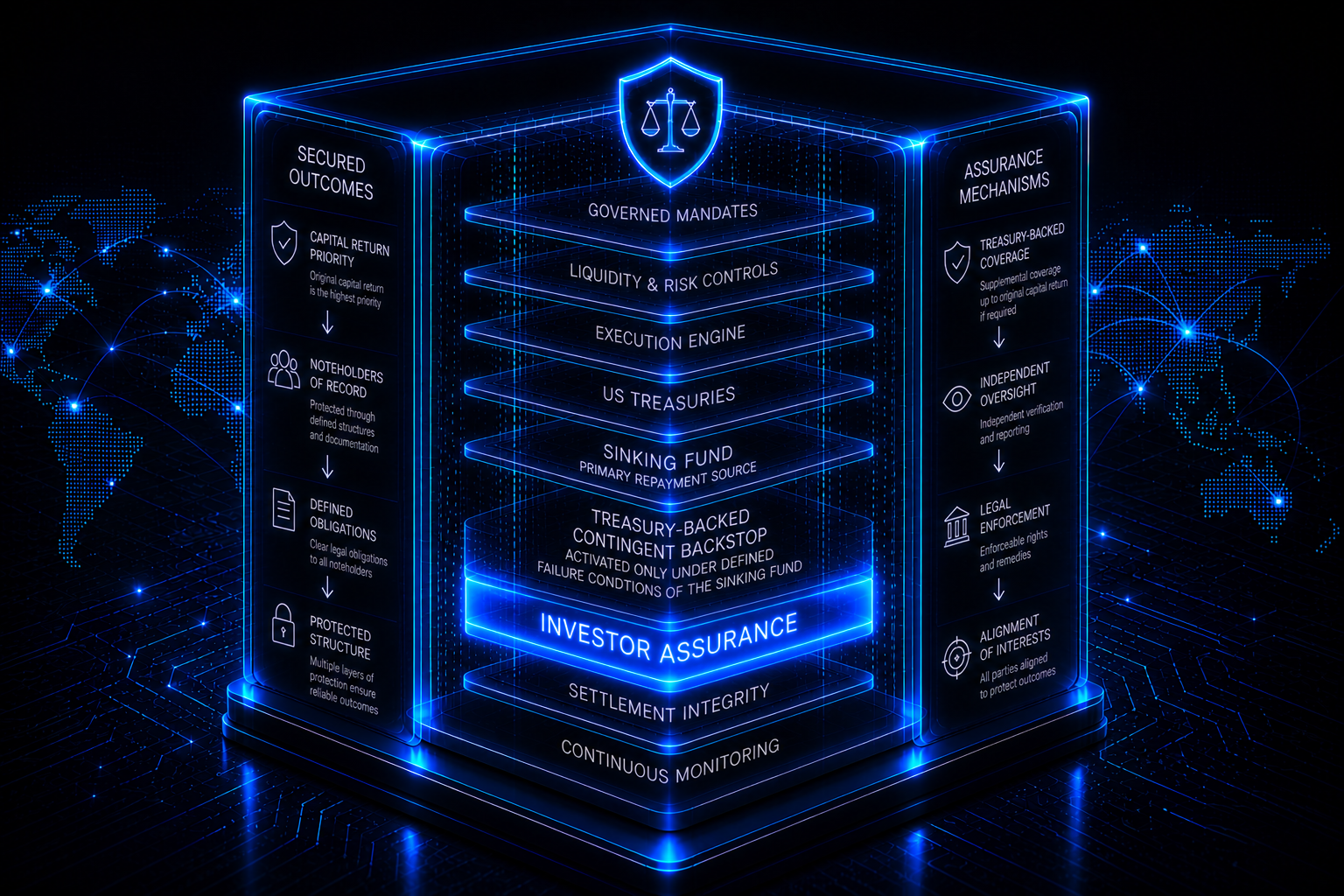
The Structured Credit Layer is a strategic component of the OVO capital framework that integrates contingent recovery support and credit enhancement to strengthen institutional financing structures.
Together, the Sinking Fund and Treasury support create a layered credit framework designed to enhance institutional confidence while maintaining the non-recourse structure of the financing.

Credit Enhancement by Structure
Credit enhancement is established within the financing structure at origination rather than relying solely on project performance.
The combination of a reserve-funded Sinking Fund and Treasury-backed support establishes a defined credit framework at issuance.
These mechanisms operate within established governance, documentation and oversight procedures.
Contingent Recovery Support
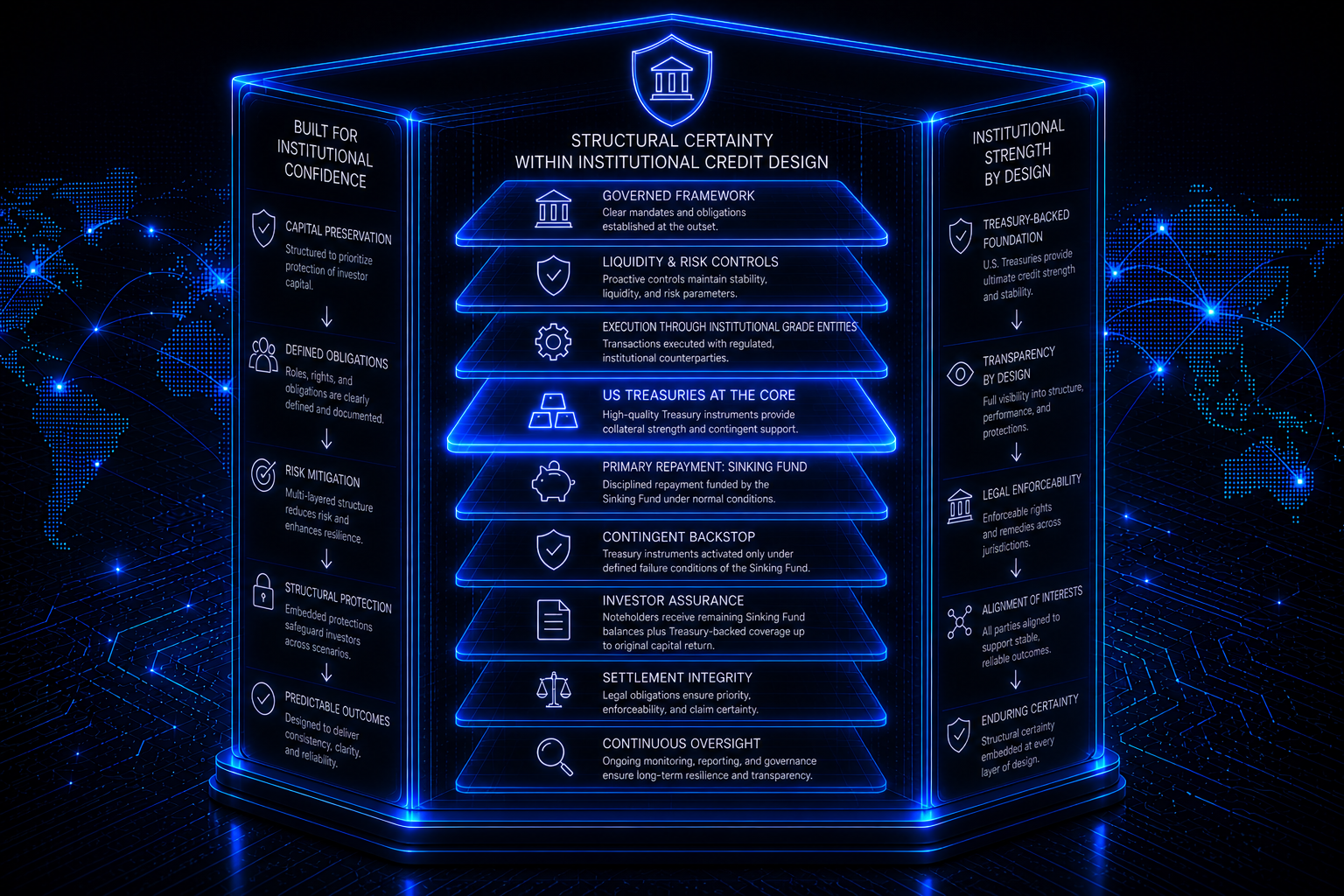
The Sinking Fund remains the primary source of distributions and principal repayment.
Treasury support functions as a contingent recovery mechanism intended to provide additional credit enhancement under defined circumstances.
Together, the Sinking Fund and Treasury support create a layered credit framework designed to enhance institutional confidence while maintaining the non-recourse structure of the financing.

Why It Matters
Institutional investors seek clarity regarding repayment mechanisms, reserve support and recovery pathways.
By combining a reserve-funded Sinking Fund with Treasury-backed contingent support, the OVO framework introduces multiple layers of structural protection within the financing architecture.
The result is a transparent and disciplined credit enhancement framework designed to support institutional capital participation.
Institutional Confidence by Design
The Structured Credit Layer complements the OVO Sinking Fund by providing contingent recovery support and additional credit enhancement.
Together, these mechanisms establish a structured framework where repayment, reserve administration and recovery procedures are defined at inception and governed throughout the life of the transaction.
The result is a financing model designed to align institutional capital with disciplined non-recourse execution.